
Functional health care has grown quickly, and growth attracts both excellent clinicians and opportunists. Social media has made it easy to build an impressive-looking brand around a handful of products and a confident personality. Meanwhile, people who have been dismissed by the conventional system are often tired, motivated, and willing to try almost anything, which is exactly the situation that makes careful vetting so important.
Skepticism also protects you from a second problem: practices that treat conventional medicine as the enemy. A trustworthy doctor in this space respects what conventional care does well, refers when something is outside their scope, and never asks you to abandon care that is working for you. If a provider talks as though every other doctor you’ve seen was wrong, that deserves a raised eyebrow.
A skeptic who asks hard questions isn’t a difficult patient. They’re exactly the kind of patient good doctors want.
Here’s the part most people don’t realize. In most states, words like functional, integrative, holistic, wellness, and root cause are not protected titles. Anyone can put them on a website. What is regulated is the license, the credential that says a state board has verified a person’s education, tested their competence, and granted them legal authority to practice within a defined scope.
That means the useful question isn’t “does this person call themselves a functional doctor?” It’s “what is their license, who issued it, and what are they legally allowed to do?” Those are verifiable facts, and they’re far more informative than any title on a homepage.
This distinction trips up a lot of people, so it’s worth spending a moment on it. Many programs offer certificates in functional or integrative approaches. For a licensed doctor, a certificate like that is continuing education, a way of deepening training they already have. For someone without a clinical license, the same certificate does not create the legal authority to evaluate and care for patients.
A health coach with a certificate can be a wonderful source of support and accountability, and there’s a legitimate role for that. But a coach and a licensed doctor are not interchangeable, and a reputable coach will tell you so. The question to keep asking is simple: what license sits underneath the title?
You’ll also see different kinds of doctors working in this space, including medical doctors, osteopathic doctors, chiropractic doctors, and in states that license them, naturopathic doctors. Each holds a different degree with a different scope of practice. None of those paths is automatically better than the others for every situation. What matters is that the doctor is licensed, trained, and honest about where their scope begins and ends.
For a skeptic, three things are worth verifying, and none of them require taking anyone’s word for it.
A fair look at this field has to include what it is and what it isn’t. Functional health is not a rejection of conventional medicine. It’s an attempt to fill a gap that conventional care, through no fault of the doctors working in it, often can’t fill.
Conventional primary care runs on tight schedules. According to a time-and-motion study published in the Annals of Internal Medicine, physicians spent nearly twice as much time on electronic health records and desk work as on direct face time with patients during the clinic day. That structure leaves very little room for the extended history-taking that complex, long-running symptoms require.
Functional health practices are typically built around longer appointments, broader evaluation, and more attention to how body systems interact. The aim is to find contributors a shorter visit might miss and to build a care plan around the individual rather than the diagnosis alone.
A 2019 study in JAMA Network Open compared patients at a functional medicine center to patients in primary care and found greater improvements in patient-reported health-related quality of life in the functional medicine group. The authors were careful to note that the study design couldn’t establish that the model itself caused the difference. That’s a promising signal, not proof, and a doctor who tells you otherwise is overselling. A trustworthy one will tell you the same thing: this approach looks promising for many people with chronic, complex presentations, and the research base is still maturing.
A few patterns should make any skeptic pause.
Promises of cures or guaranteed outcomes. Honest doctors talk about likelihoods, not guarantees. Chronic conditions are complex, and the response to any plan varies from person to person.
A standard protocol for everyone. If the approach is the same regardless of your history and results, it isn’t personalized, whatever the marketing says. The whole point of this kind of care is that it’s individual.
Pressure to buy products or bundled packages before an evaluation. A care plan should come out of an evaluation, not precede one.
Disparaging conventional medicine across the board. Good functional doctors collaborate with their conventional colleagues and value what they do.
Reluctance to discuss credentials. If a doctor bristles at a simple question about licensing, that tells you what you need to know.
At True Health Clinic, the approach starts with an extended new patient appointment designed to take a thorough history, because the connections between symptoms and life events are often where the most useful clues live. Testing, when it’s ordered, is chosen based on what that individual’s history and symptoms suggest rather than applied to everyone. The care plan that follows is built around what the evaluation actually finds, and it’s adjusted as your picture changes.
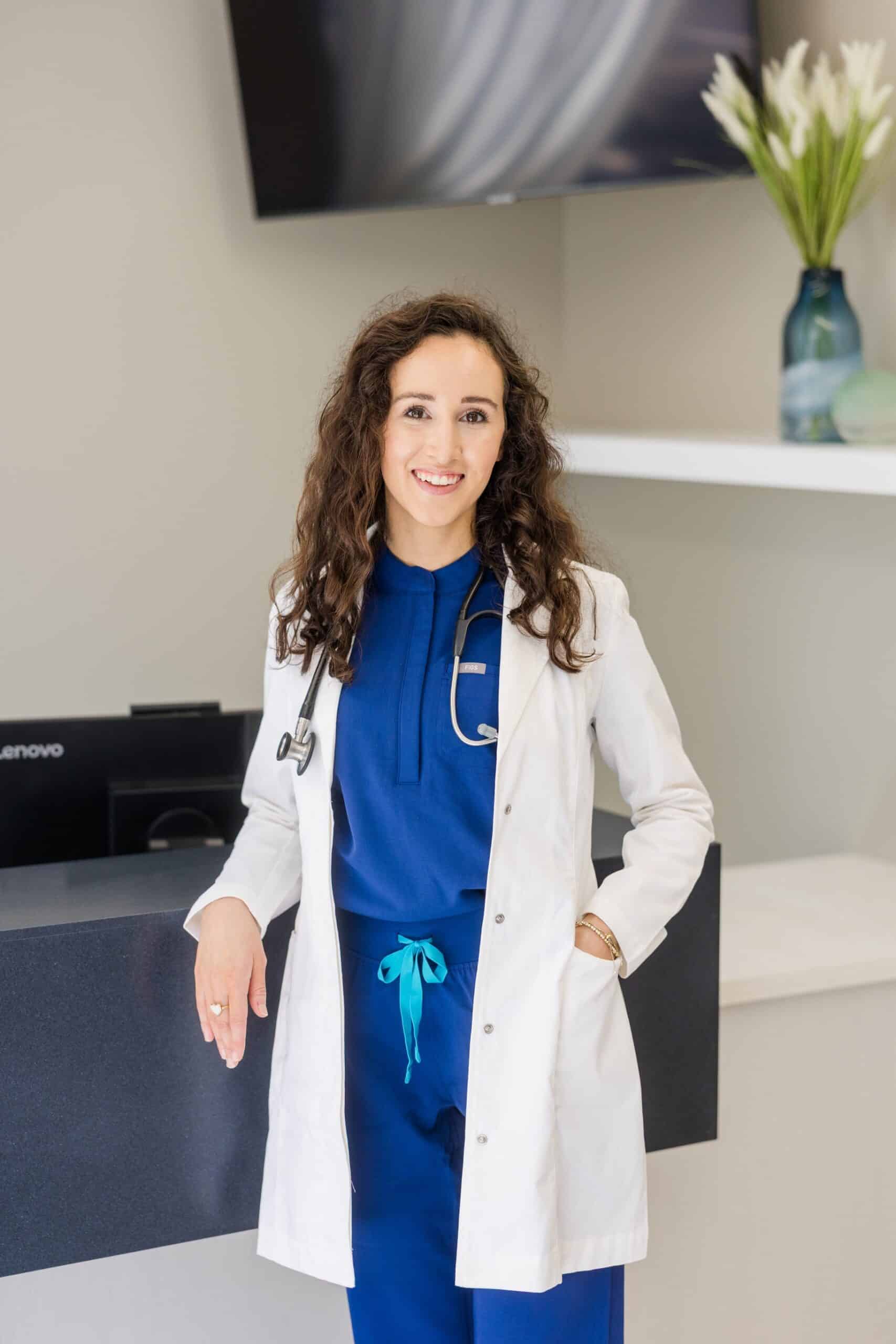
Because every patient’s situation is different, there isn’t a standard path, and Dr. Skidmore won’t pretend there is. She’ll tell you honestly whether she thinks she can help, and if she doesn’t think she’s the right fit, she’ll say so.
If you’re a skeptic, you’re in good company, and you’re welcome to ask every question on the list above. The free 15-minute phone consultation is built for exactly that. It costs nothing, carries no obligation, and gives you a chance to hear how Dr. Skidmore answers hard questions before you decide anything.
Book Your Free 15-Minute Consultation
Note: This article is intended for educational purposes and should not be used to diagnose or treat any medical condition. If you’re experiencing symptoms discussed in this article, consult a qualified healthcare professional for personalized guidance.
| PHOTOGRAPHY BY lauragonzalezphotography.com | Made by a Peanut |